Deutsch

Construction method - tunnelling
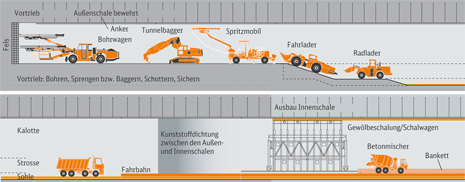
The tubes of the tunnel are constructed as a double-skin vault structure of shotcrete with an inner skin of in-situ concrete. The two skins are separated by a plastic foil.
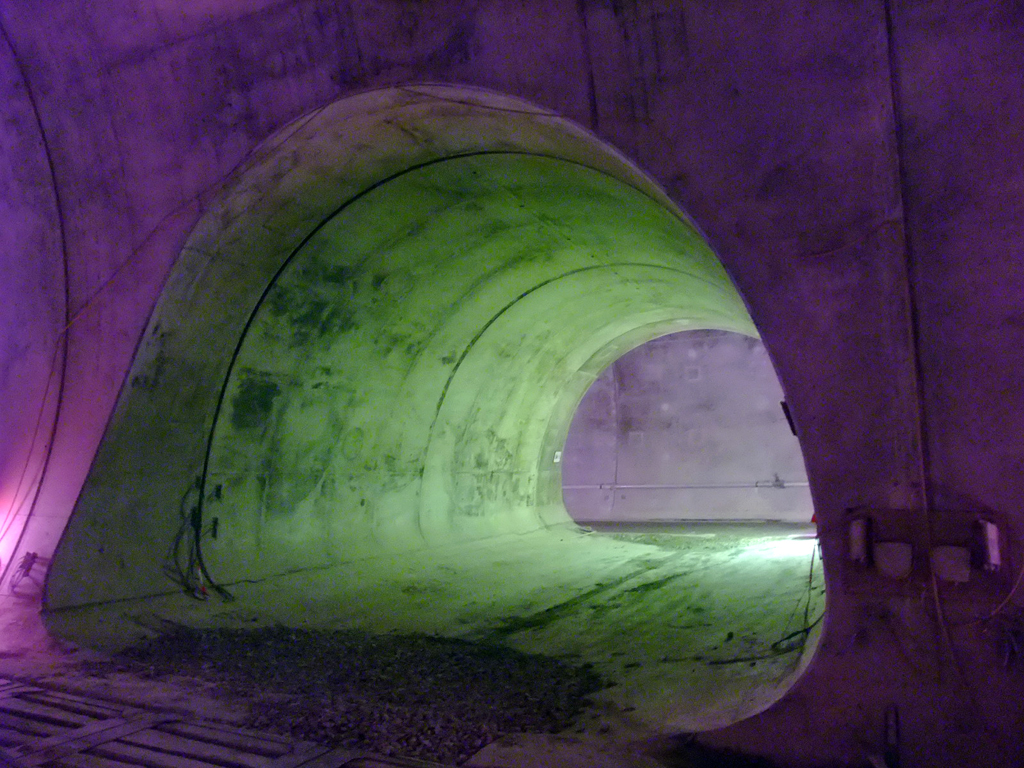
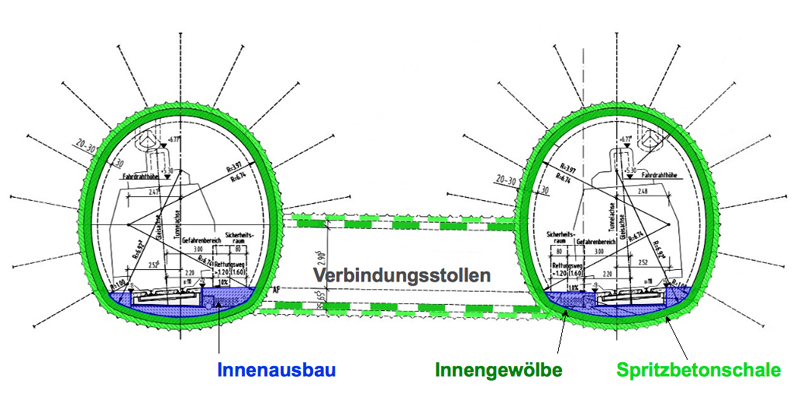
The excavation area is 86 square metres. Tunnelling of the two tubes starts simultaneously from the east portal to the west and from the west portal to the east.
Shotcrete is used on the walls as in mining.
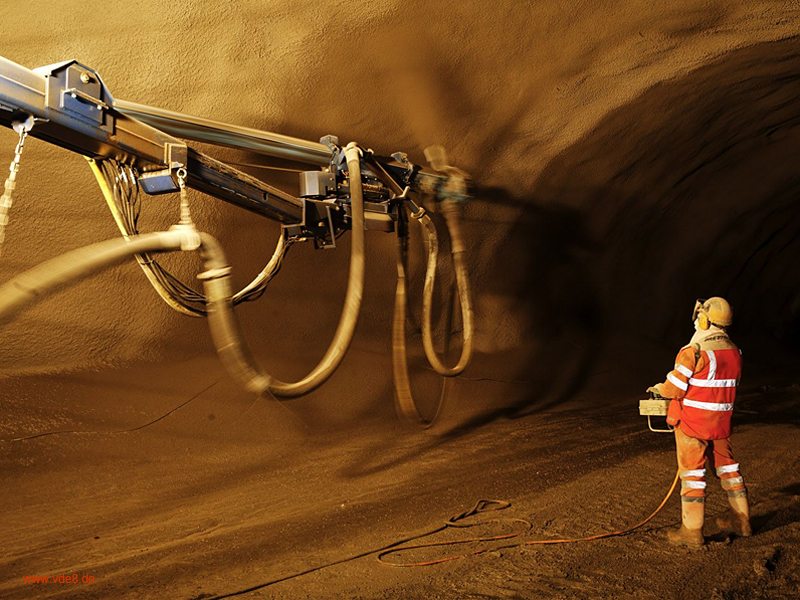
Careful tunnelling is required to form this shallow tunnel, which has a depth below the surface of only 15 to 50 metres. The whole tunnel cross-section is not formed at once. Instead, it is done in three sections, starting from the top.

Depending on the geotechnical engineering conditions, tunnelling proceeds by means of explosions or using tools such as jackhammers or part-face heading machines. The cross-passages are created one after the other while work on the main tunnel proceeds further into the tunnel.
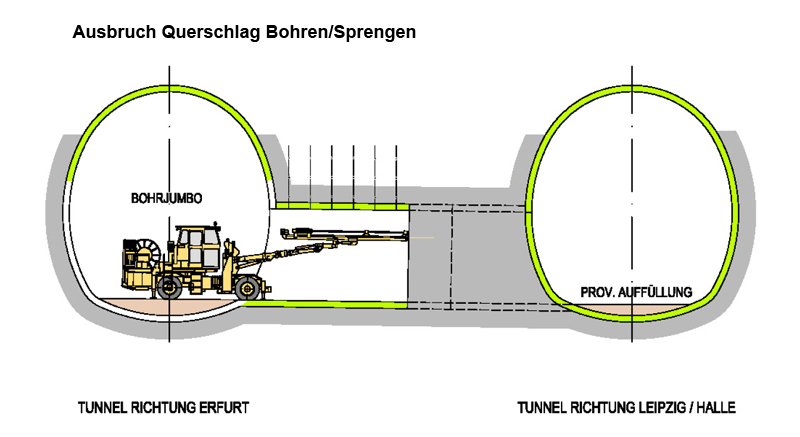
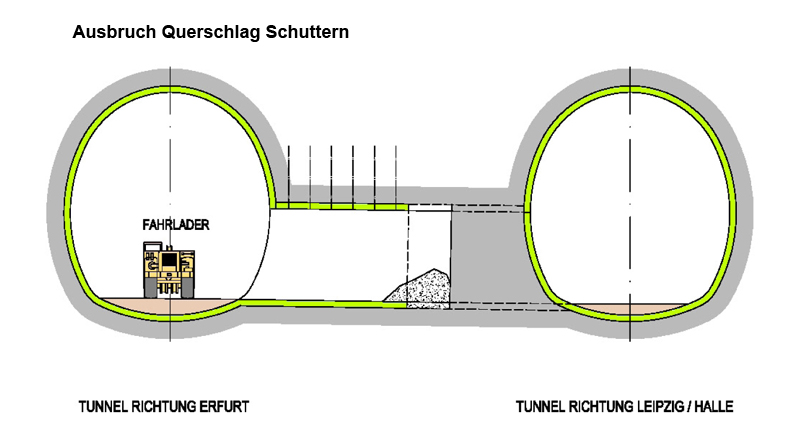
The cross-passages connecting the tubes of the tunnel are to be used as rescue tunnels when the tunnel goes into operation. During construction, they are used as logistics tunnels for the removal of material. The material is removed from the cutting face and taken to the nearest cross-passage using loaders that can hold 7.5 cubic metres of rock.
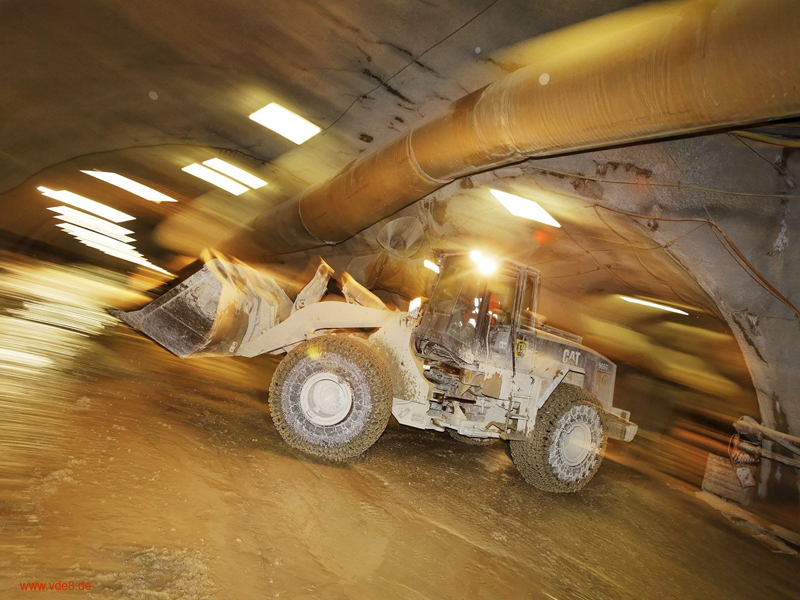
The excavated material is tipped by excavators into a jaw crusher, from where it is transported by conveyor belt to the location where it is to be deposited outside the tunnel portals. The material excavated in this way is being used for landscaping near the portals.
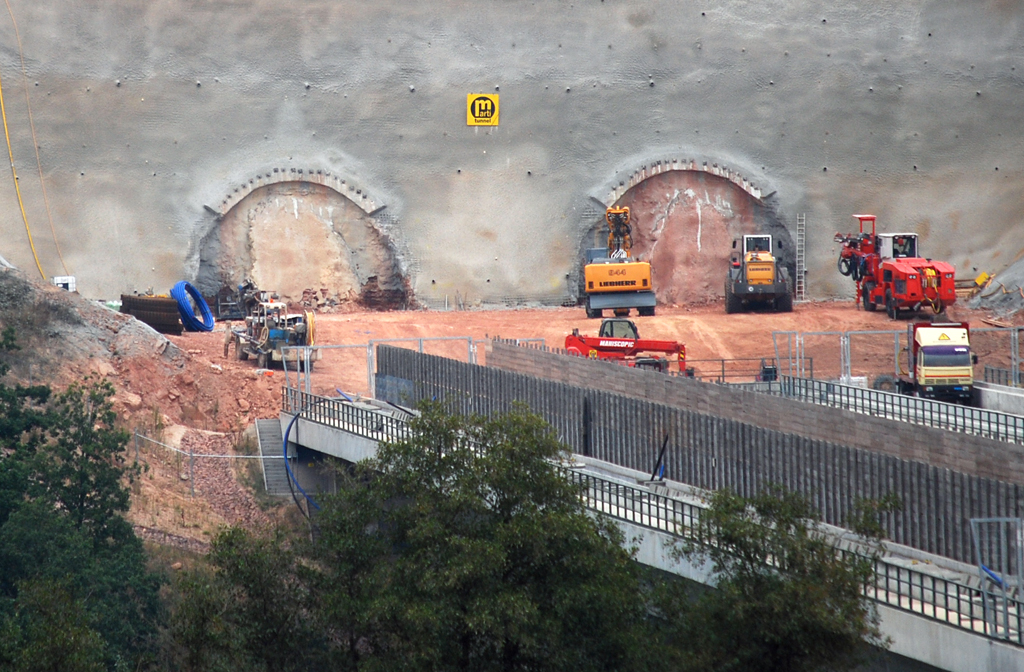
The excavated material is tipped by excavators into a jaw crusher, from where it is transported by conveyor belt to the location where it is to be deposited outside the tunnel portals. The material excavated in this way is being used for landscaping near the portals.
 Information Centres
  New travel times & lines
  Construction site info
 Press releases
  Youtube channel
  Contact