Deutsch

DyStaFiT full-scale test to verify the dynamic stability of the railway substructure in the area of the Eierberge tunnel
Basics
According to the current guidelines of DB Netz AG for earthworks (Ril 836 - first update dated 10/2008), proof of the dynamic stability of the substructure of the route is to provided for lines with a ballastless track or ballasted tracks which will be used by trains travelling at speeds of more than 200 km/h.
A device called the DyStaFiT (Dynamic Stability Field Test) was developed in 1996 to verify the dynamic stability of the railway substructure on high speed lines (HSL).
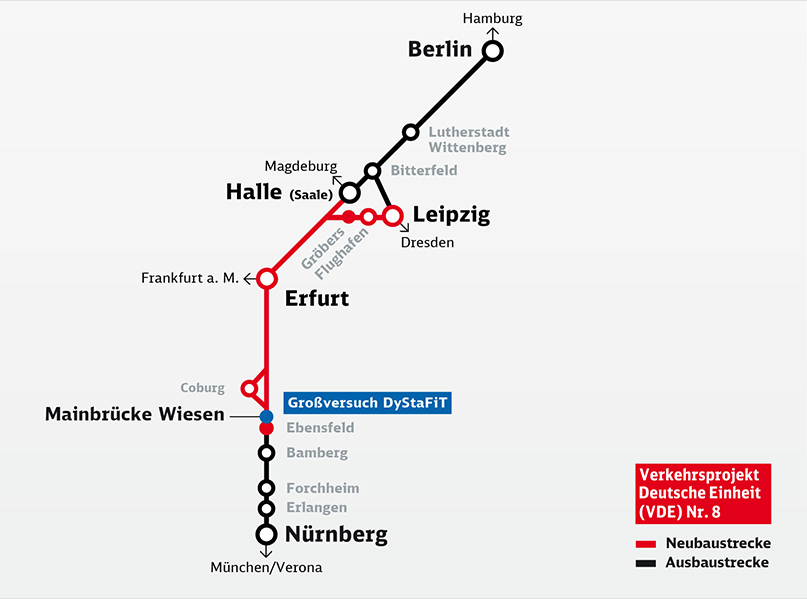
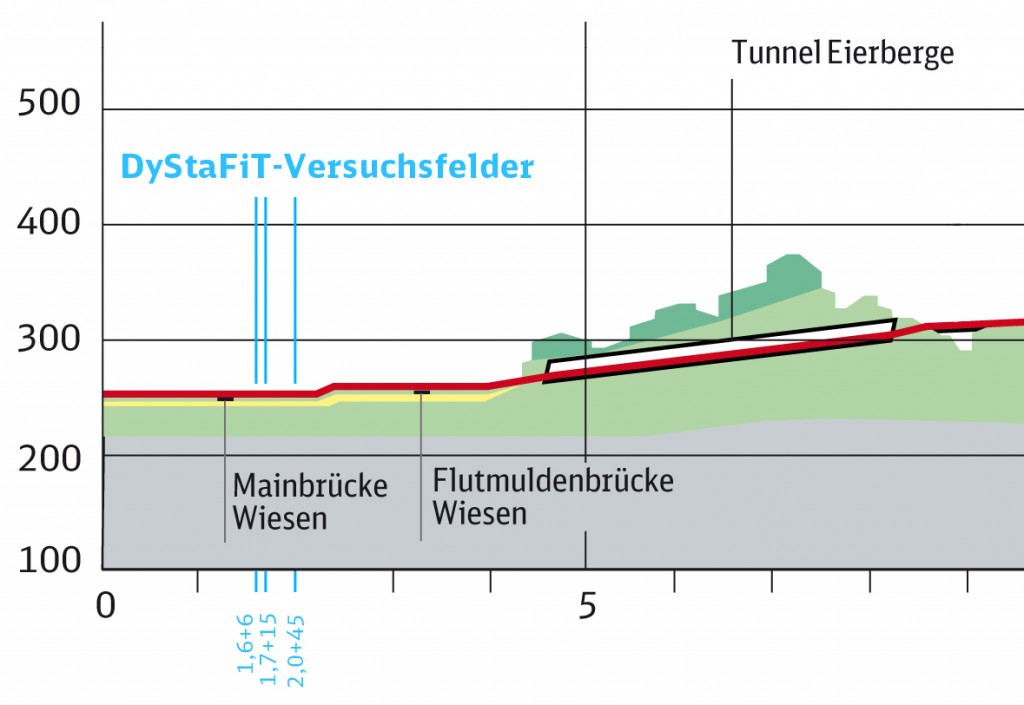
After use on the VDE 8.2 new line Erfurt-Leipzig/Halle, new line Cologne-Rhine/Main, section B, central, internationally on HS lines in the Netherlands and Spain, in July 2011 this device was used in the Eierberge tender package for the VDE 8.1 new line Ebensfeld-Erfurt at three testing sites between new line construction km 1.6+60 and 2.0+45.
Construction of the DyStaFiT device
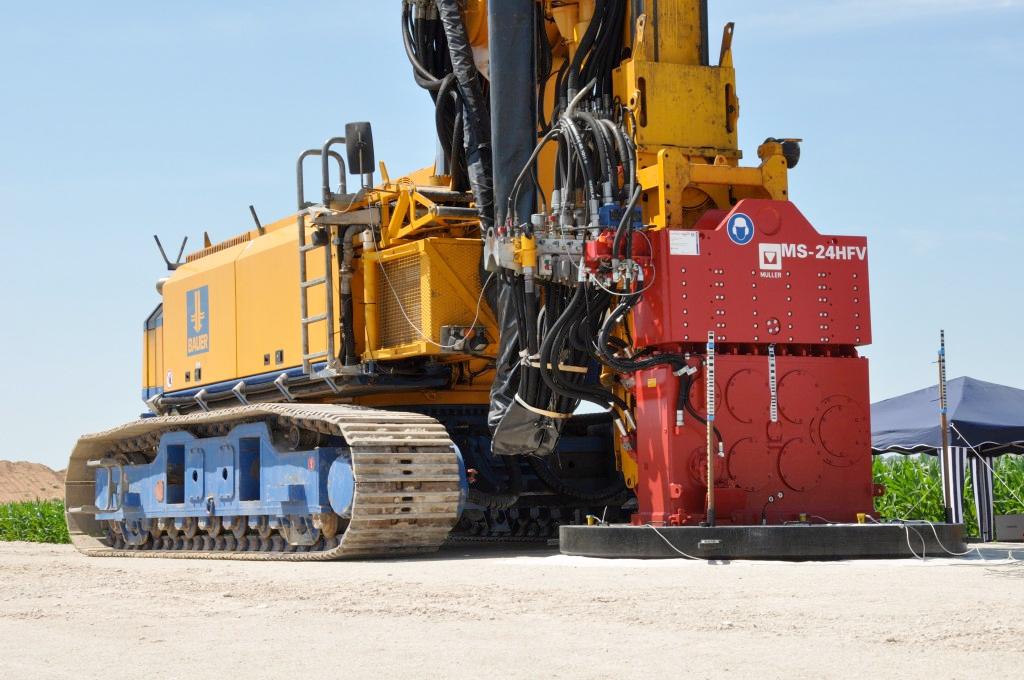
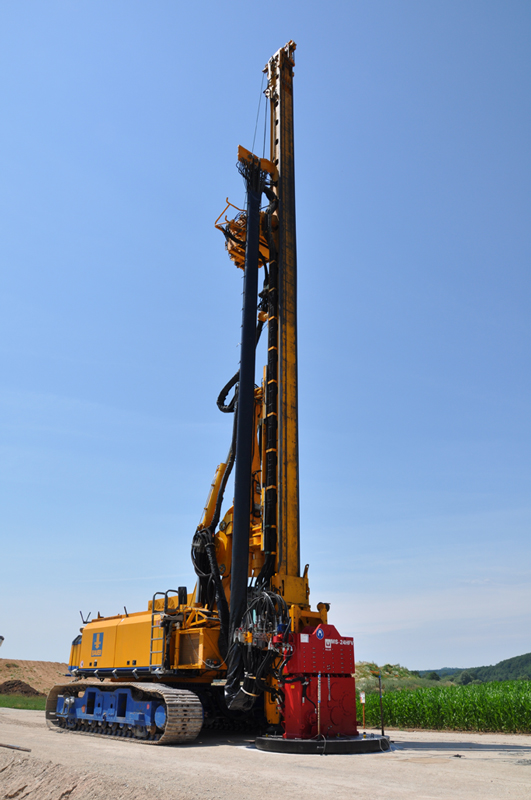
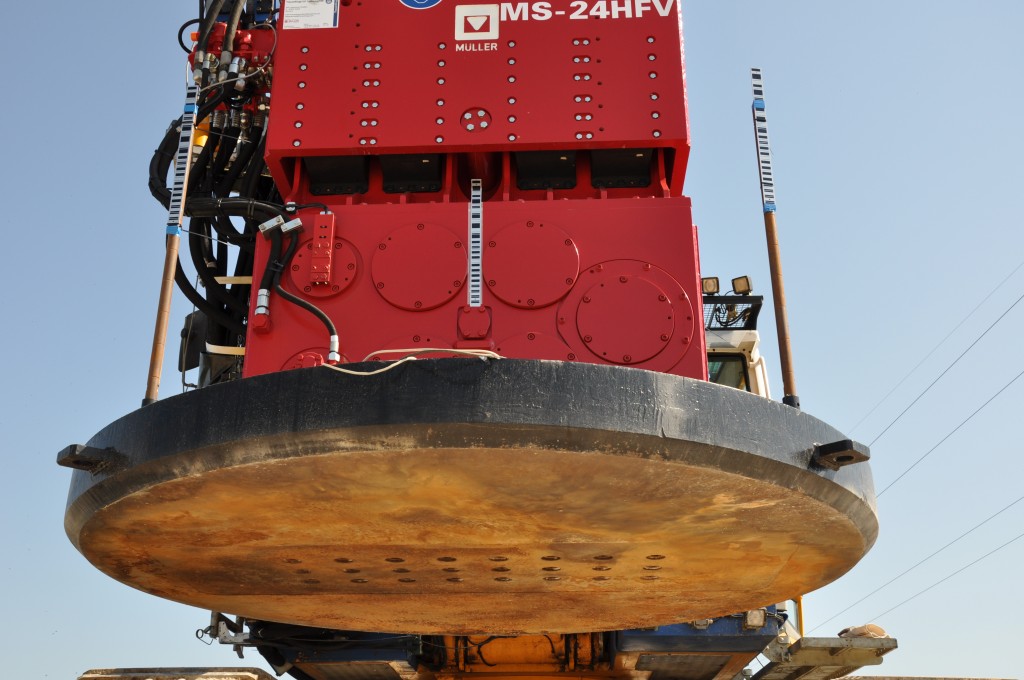
The DyStaFiT device consists of three main components:
- Carrier RG 20 S (pile driver), weight: 56 t, height: 22 m
- Vibrator (Müller Vibrator) MS-24 HFV, weight: static 5.0 tonnes, dynamic 2.9 t, adjustable vibration frequency to 39.2 Hz
- Steel plate, diameter: 2.5 m, weight: approx. 5.0 t
Evaluation
Using the above-named DyStaFiT-device individual components, the real loads (load model LM 71 in accordance with DIN Technical Report 101), vibration speeds and frequencies of an ICE 3 train travelling at 300 km/h as well as the passage of a locomotive-hauled freight train at 100 km / h can be simulated in a 1:1 true-to-scale trial. The vibrations and vibration speeds, the subsidences on the top of the track formation protection layer (PSS) and the underground subsidences are recorded using extensive built-in measuring instruments and special software.
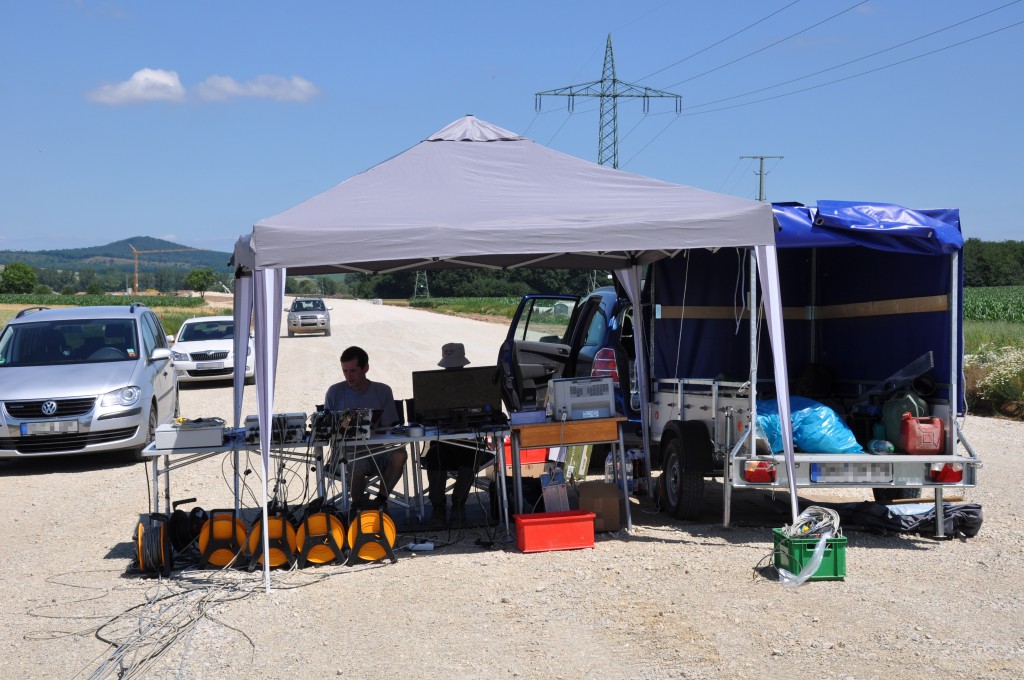
The approx. 700,000 registered load alternations (= passage of trains) simulated on one working day using mixed traffic as part of the full-scale tests equalled around 14 years of track load for the NBS Ebensfeld-Erfurt line, i.e. around 1/4 of the expected service life of the track superstructure (60 years for ballastless track).
The measured underground subsidences in the alluvial loam after the above load alternations are less than 1 mm if a sufficiently large binder-enhanced soil layer (base layer) is used in the railway substructure.
 Information Centres
  New travel times & lines
  Construction site info
 Press releases
  Youtube channel
  Contact