Deutsch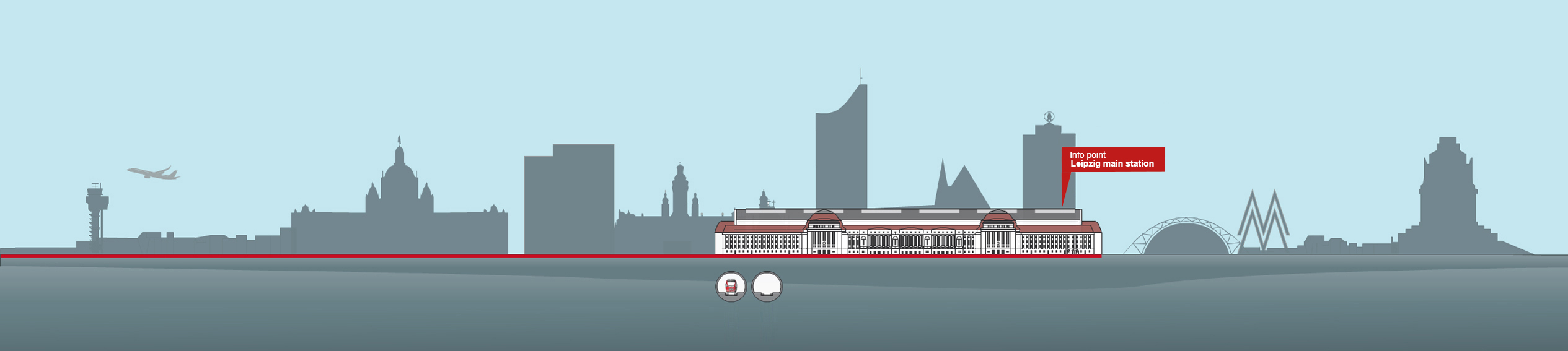

Following in a strong tradition: Leipzig as a railway hub
The City of Leipzig is a major traditional staging post for travel and commerce. Since time immemorial, communications from every direction have been crucial to the city's development as an exhibition and book-printing centre. Saxony's first railways were built over 150 years ago, paralleling the old trade routes such as the via regia (from Paris to Krakow). Leipzig marks one end of the first German long-distance railway, from Leipzig to Dresden, opened in 1839. The line from Leipzig to Magdeburg followed in 1840. In 1842, the first north-south connection in Germany was completed, from Leipzig to Hof via Altenburg, on the Saxony – Franconia main line. The Thuringian line in the direction of Erfurt was next, in 1846.
The Leipzig hub joined the electrified German railway network in 1911. Its importance is also reflected in the imposing station building of what still remains Europe's largest terminus, completed in 1915.
 Information Centres
  New travel times & lines
  Construction site info
 Press releases
  Youtube channel
  Contact