Deutsch

The Burgberg tunnel

Facts and figures
| Length of the structure: | 306 m |
| Construction method: | mining |
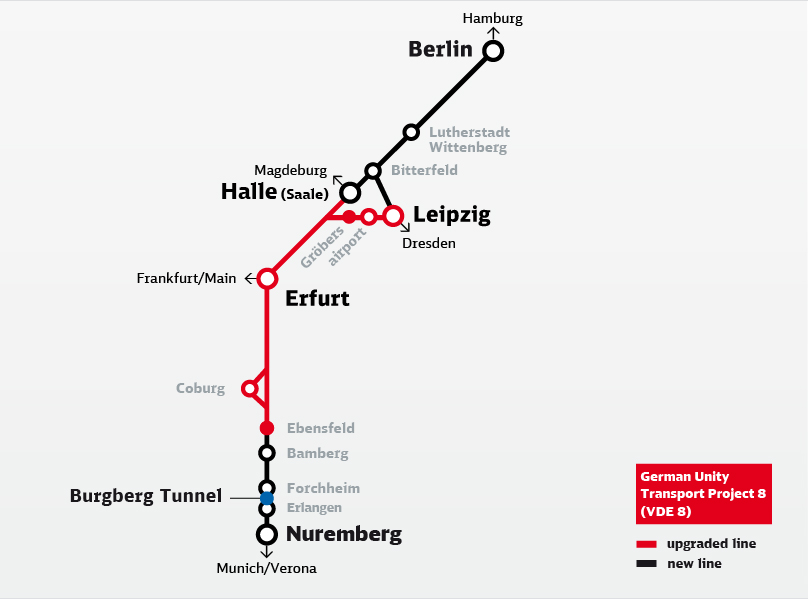
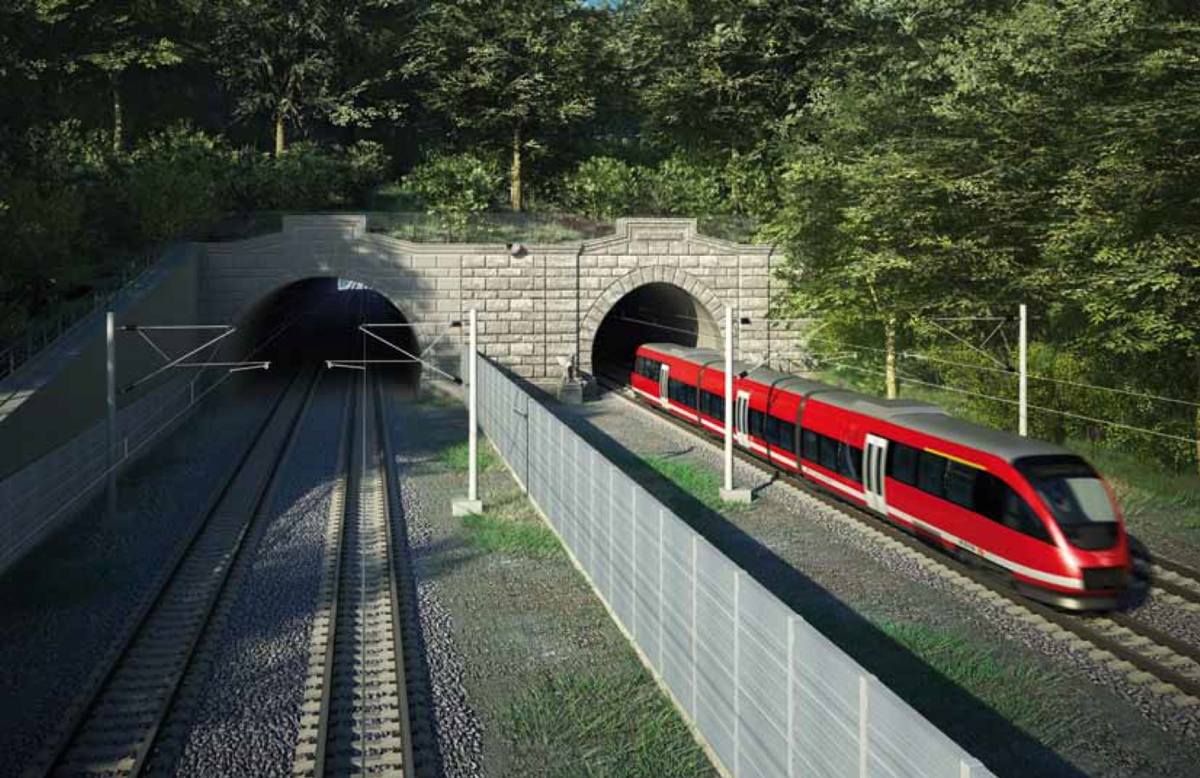
The east-west alignment of the Burgberg feature forms a natural end to the Regnitz valley, which extends from north to south. Construction of the Ludwig Canal and the trunk road (now the A73 Franconia motorway) through the Regnitz valley between the mills on the Regnitz and the Burgberg was extremely difficult. The first railway tunnel in Bavaria was dug for the Ludwig South-North Railway, built between 1841 and 1844. A second bore has to be driven alongside the original 1844 tunnel to accommodate the continuous four-track upgrade of the Nuremberg – Ebensfeld line (VDE 8.1). The existing tunnel also has to be upgraded in the course of the construction work. The fabric of the tunnel requires a driving method adapted to the sand and clay of the Middle Burgsandstein formation. The maximum depth of rock above the tunnel is 38 m. The tunnel will have a marked escape route with a handrail. No emergency exits or rescue areas are necessary, due to the length of 306 m. The tunnel will end at the same point as the existing tunnel, in order to retain the historic portals. The modified design of the portals will be agreed with the monument protection authorities.
Construction method
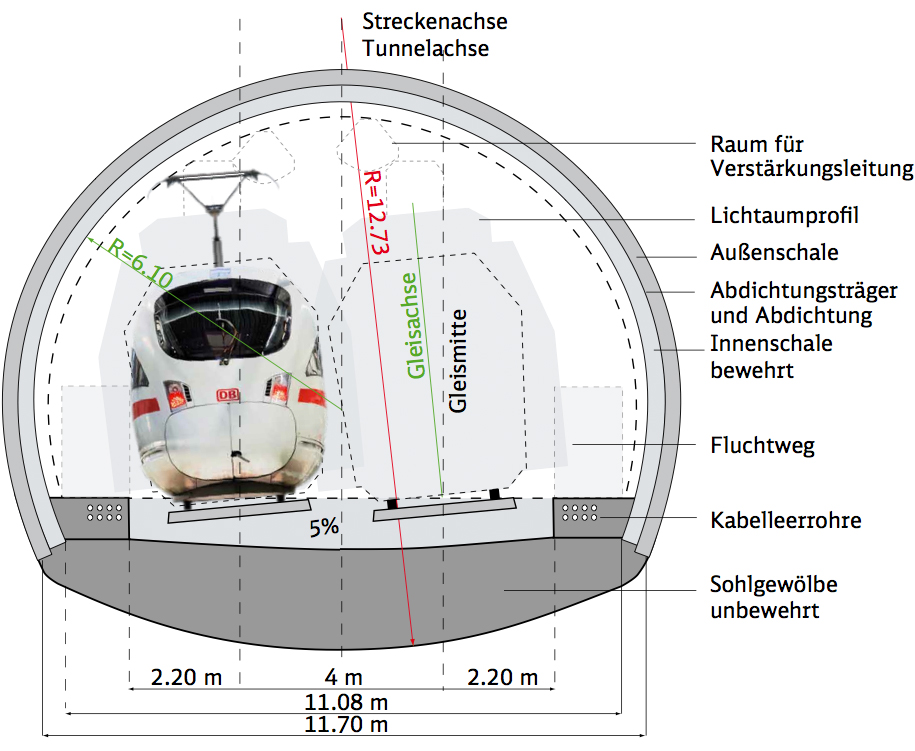
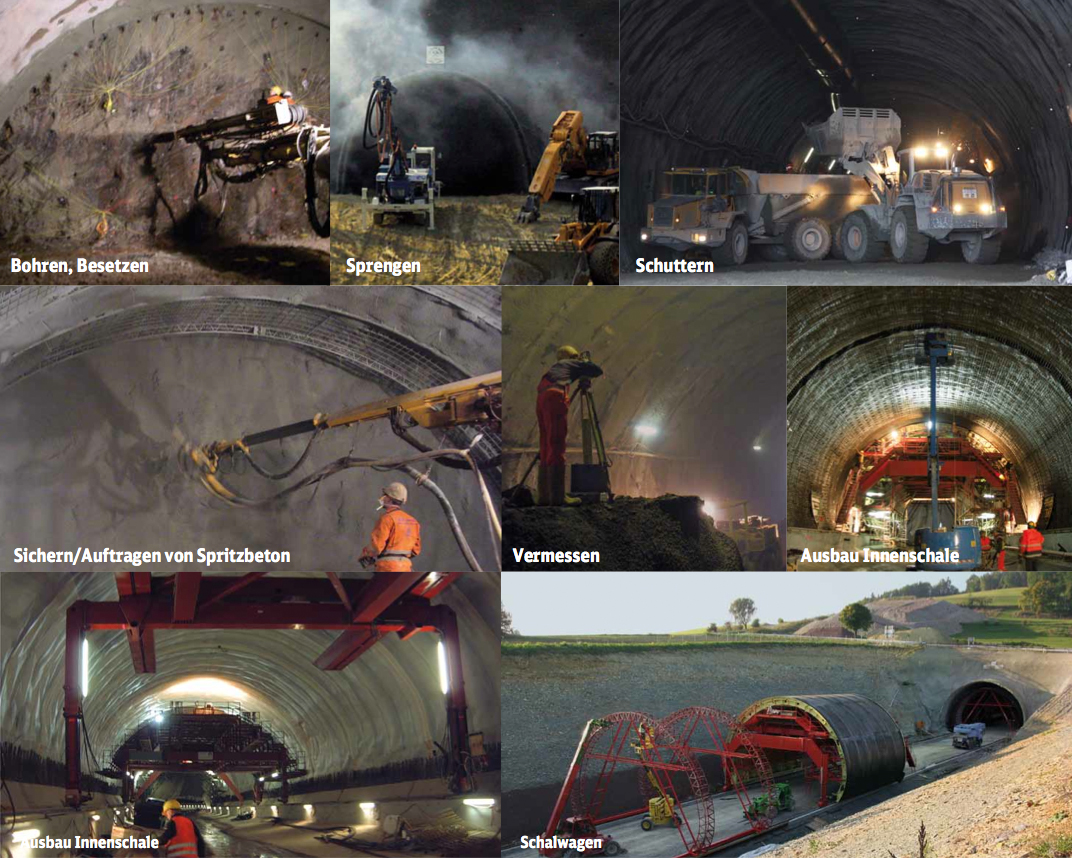
The Burgberg tunnel will be constructed as a double-walled structure by the mining method. It will advance in stages, using explosive or excavators. The rock removed will be carried away by special vehicles ("mucking out"). The cavity thus created will then be stabilised with steel mesh arches, rock anchors, stakes and quick-setting air-placed concrete. This structure will form the outer tunnel wall. The whole cross-section will not be formed at once, but one level at a time, from top to bottom. The levels are known as the crown, bench and floor. A tunnel cross-section of about 130 square metres will be formed. This corresponds to the gable end wall of a house. Driving will take place around the clock, so that the rock arch formed can absorb the forces evenly and continuously. A second, inner bore of reinforced concrete about 35 cm thick will then be constructed inside the outer wall of the tunnel. This will form the visible tunnel when construction is complete. A formwork carriage will be used to produce segments of the finished fabric of the tunnel, each 12.5 m long.
 Information Centres
  New travel times & lines
  Construction site info
 Press releases
  Youtube channel
  Contact