Deutsch

Zuckermandelweg railway bridge, Nuremberg
The Zuckermandelweg railway bridge was built in 1911 and has not been altered or replaced since. It consists of two masonry arches. The western arch over Lenkersheimer Strasse carries up and down lines 5950 from Nuremberg marshalling yard to/from Fürth. The eastern arch carries a Grossmarkt station relief line and a former branch to the market itself. The market no longer has a working rail link.
The original plans for the Pegnitz tunnel provided for cut-and-cover construction from a few metres north of Leyher Strasse to south of Zuckermandelweg. In the meantime, TBM technology has advanced so far that a machine can be used even with a small overburden, if appropriate precautions are taken. A temporary earth surcharge will therefore be created in this area. The TBM will then travel through to the south of Zuckermandelweg and the earth mass will then be reduced so that it only occupies DB AG property. This will avoid the inconveniences of the cut-and-cover method.
Some years have passed since the early 1990s, during which the Zuckermandelweg railway bridge has continued to deteriorate.
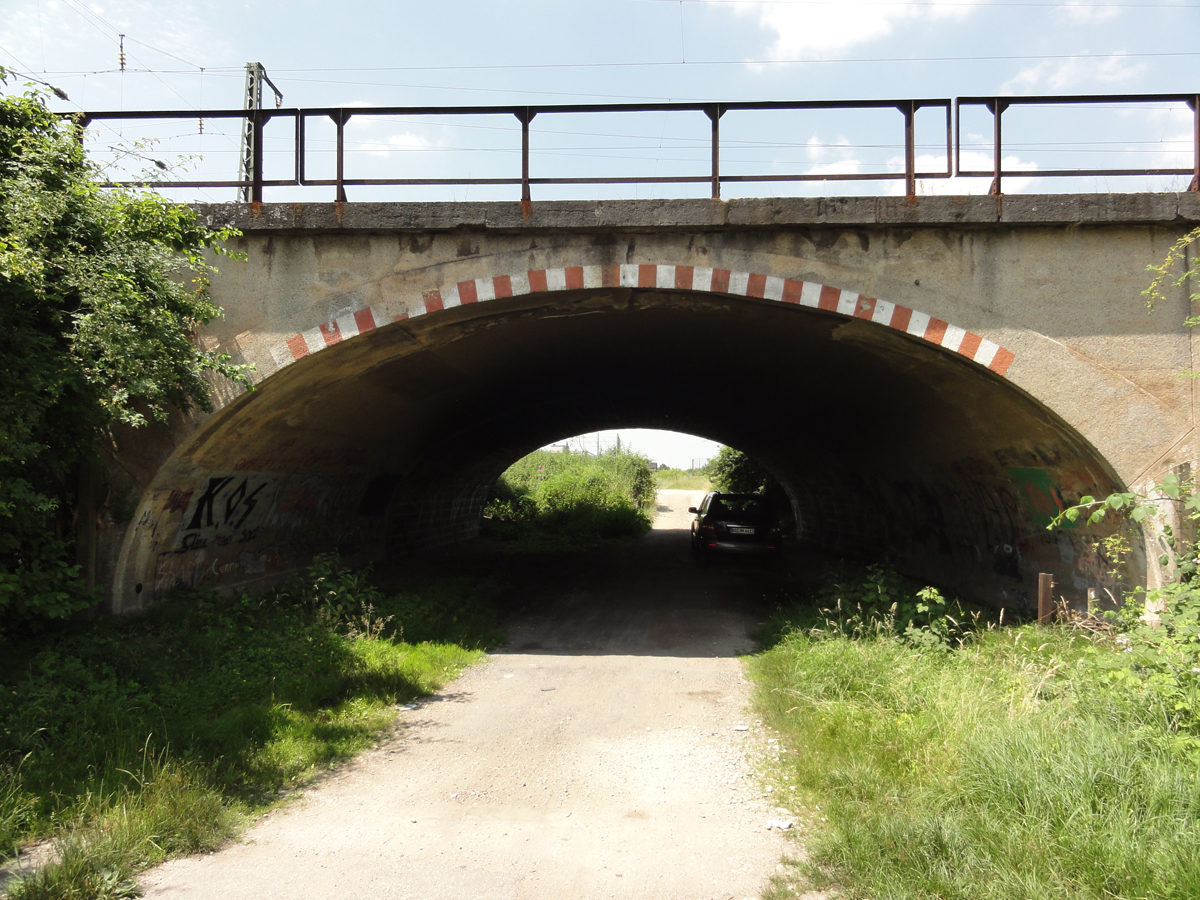
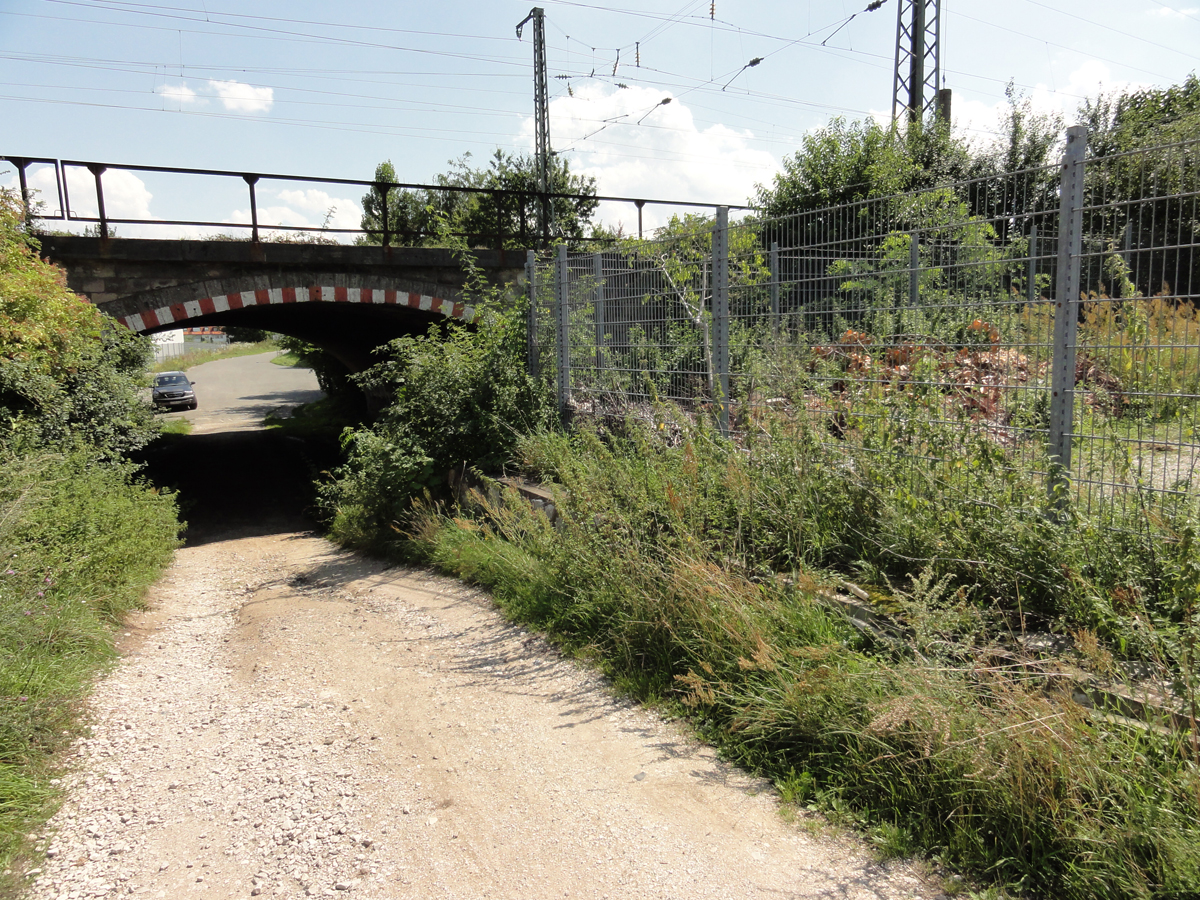
The new tunnel bore will run parallel to the existing tracks, on the eastern side. Driving the tunnel will have a great effect on the bridge foundations, which must be comprehensively secured, e.g. by injections underneath. The bridge is also in a very poor structural condition and must be classified as dilapidated. Weight limits are already in force on the bridge.
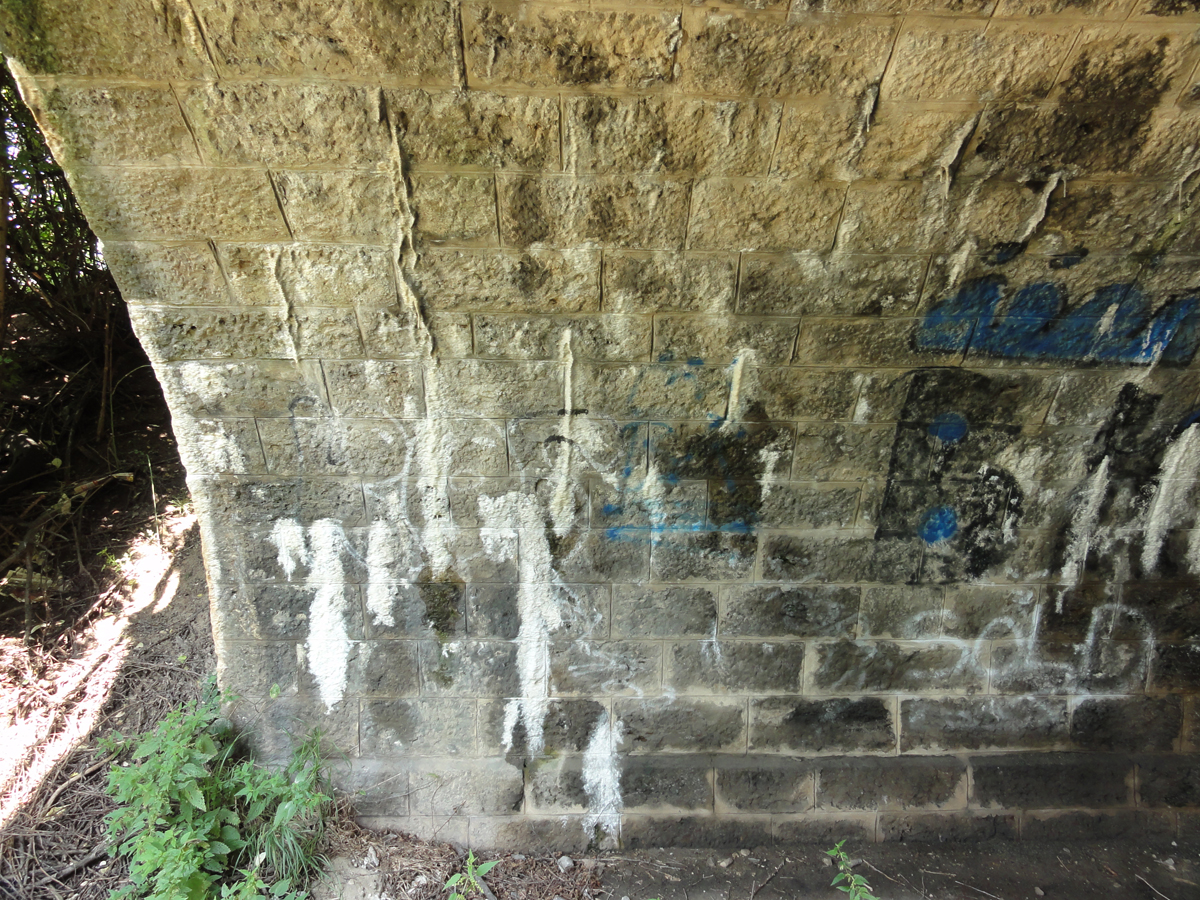
The rail connection to the market is no longer in use and DB AG has no further interest in the bridge. The City of Nuremberg withdrew the right of way under the bridge and unadopted the thoroughfare about 40 years ago. DB AG has tolerated occasional use by pedestrians and cyclists since then. No further information on current levels of use is available at present.
Within the scope of the fourth planning amendment for the Pegnitz tunnel, DB Netz AG has decided to demolish the bridge without replacing it. Complete backfilling with soil is intended at this point. It will take at least twelve months. It is no longer cost-effective to maintain and operate the structure in its current form.
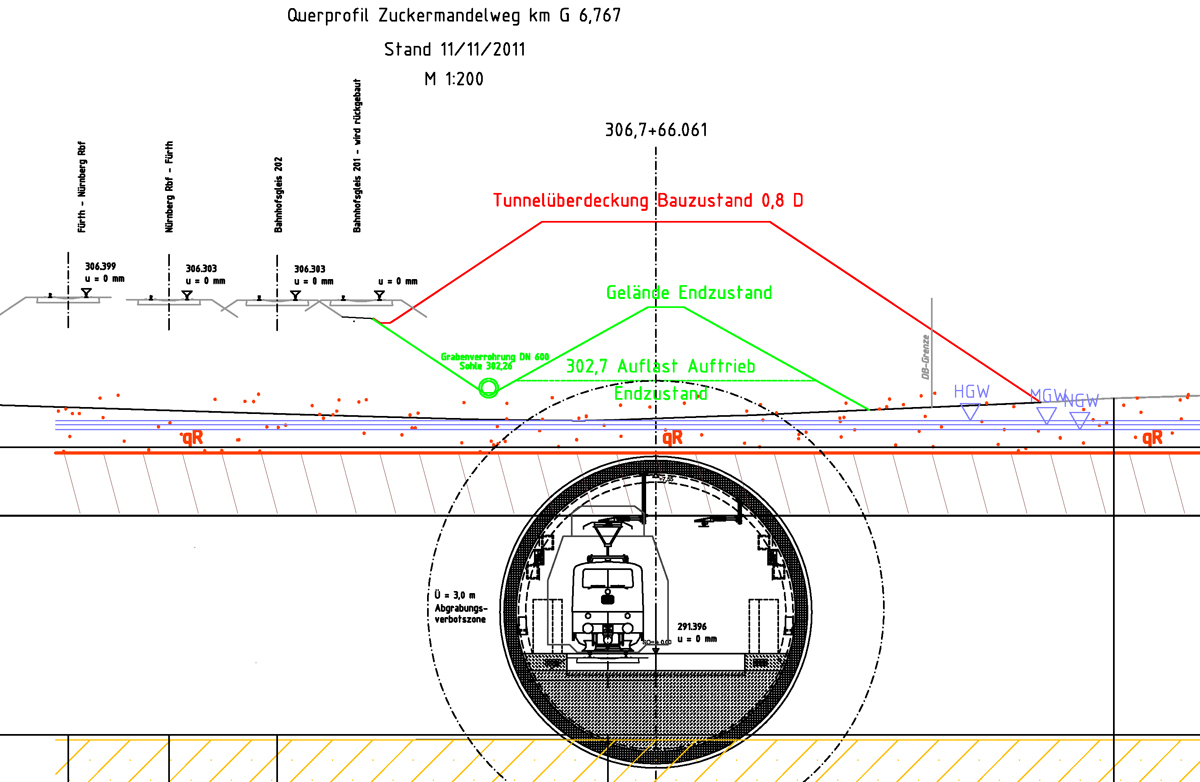
The City of Nuremberg has been aware of the amended plan since the beginning of 2010 and relevant agreements have been reached. The City Council intends to keep the lane open. Technical solutions have also been agreed and corresponding planning criteria submitted to the City (see drawing above). If possible, a new, straight connection will be created for pedestrians and cyclists, to be adopted as a public highway. The Transport Planning Office, as the responsible road maintenance authority, is currently undertaking preliminary planning. The relevant agreements are being negotiated, but complete closure of the lane for at least 12 months during the tunnel construction period (specifically: when the TBM passes beneath) will be unavoidable. The pedestrian subway under the existing tracks could be built when the bridge is demolished, if the plans are approved by the city and the right to construct a thoroughfare, for which application must also be made to the city, is available. Otherwise passage of the TBM must take place in a new construction process.
 Information Centres
  New travel times & lines
  Construction site info
 Press releases
  Youtube channel
  Contact